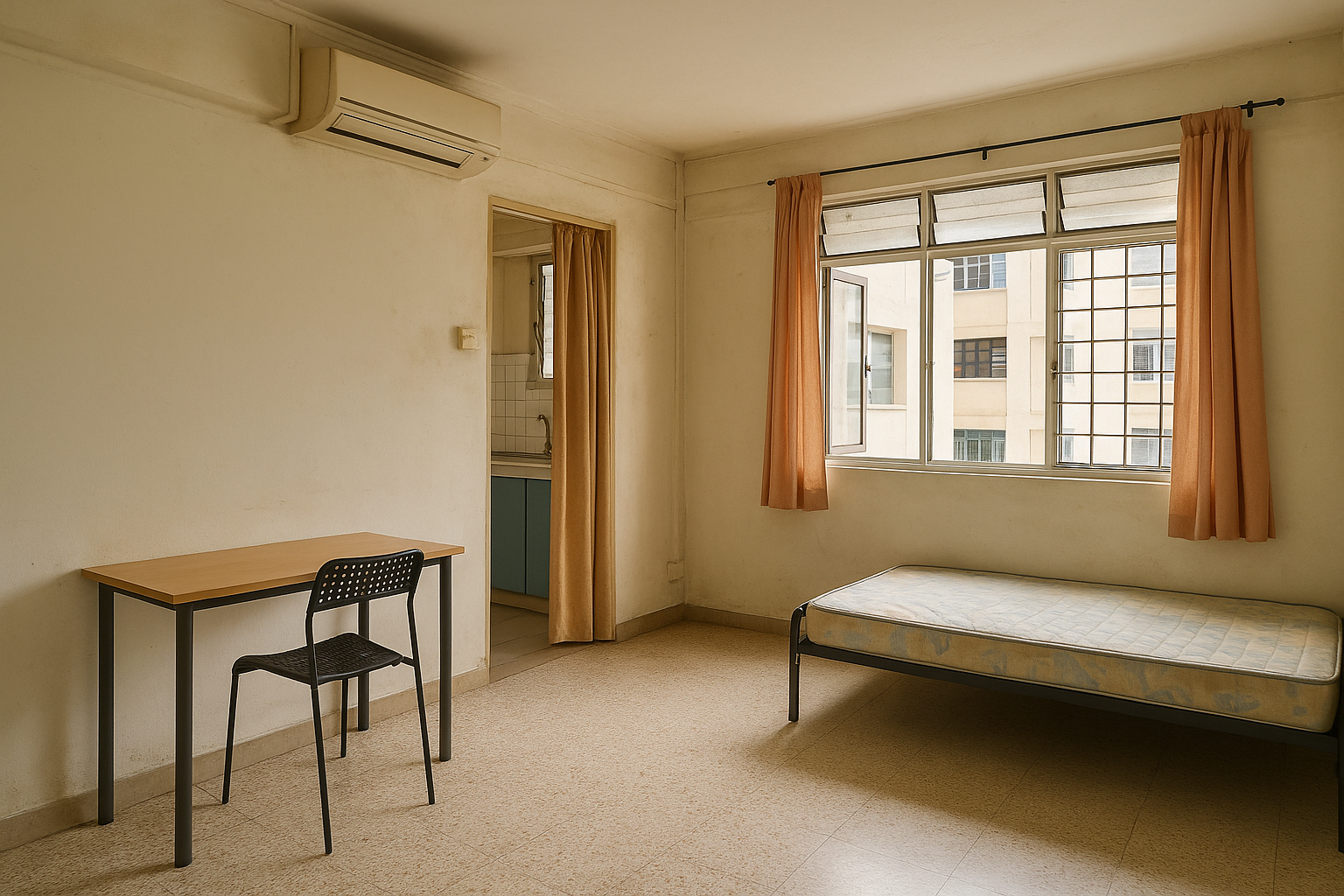
There is a certain charm to Singapore’s older neighborhoods streets lined with mature trees, coffee shops that have existed longer than some of the high-rise condominiums in the city, and communities that still feel grounded in everyday life. Bendemeer Road is one of those places. It isn’t fancy, it isn’t polished, and it certainly isn’t trying to compete with the gleaming skyline of the Central Business District. But it has something that many people quietly appreciate: affordability, convenience, and an unpretentious slice of local life.
At 30 Bendemeer Road, within the residential cluster known as Bendemeer Ville, sits a listing that many budget-conscious tenants have clicked on. With a rental price of S$550, it is one of the most accessible options for short-term renters who are navigating the notoriously competitive housing market in Singapore. It’s no surprise that the listing has gathered likes, interest, and a fair amount of discussion. But what exactly is it like to stay in a common space at Bendemeer Ville, in a room described as “bad space available”? This article aims to explore that question in an honest, human-centered way without glamourizing the flaws, but also without overlooking the appeal and the practicality that many renters genuinely value.
A Neighborhood That Still Feels Real
Before talking about the room itself, it’s worth taking a moment to understand the environment surrounding it. Bendemeer Road falls within one of Singapore’s more mature public housing estates. The buildings are typically older, with the straightforward, functional HDB architecture that has housed Singaporeans for generations.
What sets this area apart is its connectivity. The block sits within walking distance of three MRT stations Boon Keng on the North-East Line, and Bendemeer and Geylang Bahru on the Downtown Line. For many renters who do not own cars, this is incredibly important. Daily commuting becomes simple: one train ride to town, one train ride to work, one train ride to school. Even for foreigners who might not be familiar with Singapore’s transport system, the ease of hopping on the MRT provides immediate relief from the otherwise overwhelming city layout.
There are hawker centres nearby, small grocery shops, convenience stores, and neighborhood bakeries that still sell bread the old-fashioned way soft, warm, and wrapped in clear plastic bags. In the evenings, you can see elderly residents gathering downstairs for their nightly chats, children playing catch near the void deck, and workers returning home in a steady flow. It’s not glamorous, but it is undeniably Singaporean.
Understanding the Listing: A Space That Comes With Compromises
When the listing states “bad space available,” it immediately raises questions. Is the room small? Is it just a partitioned corner? Is it lacking privacy? In many similar cases, a “common space” means the tenant is not renting a fully enclosed bedroom, but rather a section of the living room or another shared area sometimes separated by curtains, temporary dividers, or makeshift walls. There are no illusions here: this type of rental requires flexibility and realistic expectations.
Still, renters continue to inquire, and often with urgency. Why? Because the price point is rare in Singapore’s current market. For short-term stays especially, affordability often outweighs perfection.
The unit features some of the essentials: air-conditioning, permission to cook, and the assurance that the landlord does not live inside the flat. For many renters, the absence of the owner contributes to a more relaxed atmosphere where one can move freely without the constant worry of being scrutinized. It offers a sense of shared independence a tiny but meaningful luxury for someone trying to build a temporary home in a foreign or transitional environment.
However, there is no internet provided, meaning tenants must arrange their own mobile data or portable Wi-Fi services. Water and utility charges are not included in the rent, which may add an extra cost depending on consumption. The room is also restricted to male tenants only, a common preference among shared flats where compatibility and comfort are important considerations for existing housemates.
The Human Side of Renting a Low-Cost Space
Beyond the amenities and limitations, what is it actually like to live here? Every renter enters the space with their own story. Some are students saving every dollar possible. Others are workers on temporary contracts who need a space for only a few months. Some are simply in transition between jobs, between apartments, or between life chapters they haven’t yet figured out.
For many, a common space rental becomes a humble starting point. It is where they learn how to navigate independence. It is where they spend quiet nights with a book or laptop, relying on the hum of the air-conditioner to soften the sense of unfamiliarity. It is where they form unexpected friendships with housemates who come from different countries, backgrounds, and ambitions.
There is a humbling beauty to shared living. People learn to negotiate bathroom schedules, swap cooking times, and warn one another when the laundry is done. They share food on good days, advice on difficult days, and silence on exhausted days. In a way, the imperfections of a “bad space” create opportunities for people to develop soft skills patience, empathy, adaptability that stay with them long after they have moved on.
Short-Term Stays: Freedom Without Long Commitment
One of the biggest attractions of this listing is the flexibility of short-term lease. In a market where most landlords insist on minimum contracts of six months or even a full year, this type of rental appeals to those who cannot or do not want to commit long-term. Digital nomads, freelance workers, trainees undergoing company attachments, and tourists seeking extended stays all fall into this category.
A short-term rental is also a safety net for individuals who are trying to figure out their long-term plans. They might be saving up for a better room, waiting for a work pass to be approved, or exploring different parts of Singapore before choosing a permanent rental location. In this sense, the room at Bendemeer Ville becomes not just accommodation, but a stepping stone.
Daily Living: A Mix of Practicality and Adjustment
Daily life in a common space is different from living in a full room, and renters usually go through a period of adjustment. Noise levels from the living room might be higher; privacy may not be absolute. Tenants often become more strategic with storage, learning to keep belongings tidy and compact. Many rely on headphones for personal entertainment. Some create makeshift routines late-night cooking, early-morning showers to avoid crowding shared spaces.
Cooking is permitted, which is invaluable for renters trying to save money. Meal prep becomes an important ritual, turning the small kitchen into one of the most loved areas of the unit. Some tenants describe the joy of preparing home-cooked meals, sharing a simple dinner with housemates, or teaching one another dishes from their home countries. In the absence of luxurious amenities, these moments become the sources of comfort.
The lack of included internet can be inconvenient, but it is manageable. Singapore’s mobile network is fast and reliable, allowing tenants to stay connected with work, family, and entertainment. Many low-cost SIM plans offer generous data bundles, making personal hotspots a practical alternative.
Community, Convenience, and the Value of Enough
What makes this listing truly noteworthy is not the room itself, but the lifestyle it enables. For S$550, tenants gain access to a neighborhood with excellent transportation, local charm, and day-to-day conveniences. They live in a space that is far from perfect, yet functional enough to get them through critical phases of their journey.
There is a certain philosophy embedded in rentals like this: the value of “enough.”
Not ideal, not luxurious, not flawless just enough.
Enough space to sleep, enough freedom to cook, enough accessibility to move around the city, enough affordability to avoid financial strain. And for many people, especially young workers or temporary residents, “enough” is more meaningful than what society often portrays as success.
Reflecting on the Experience
In the broader landscape of Singapore rentals, listings like 30 Bendemeer Road remind us that housing is not just about square footage or perfect facilities. It is about stories. People who choose common spaces are not settling they are navigating. They are making calculated decisions based on opportunities, dreams, and limitations. Their lives are not defined by the modesty of their temporary home, but by the resilience that guides them forward.
Living in a shared common space teaches humility and resourcefulness. It teaches gratitude for simple comforts: a working air-conditioner on a hot day, a quiet corner for evening rest, a kitchen where one can cook familiar food after a long shift. It teaches the value of community, even among strangers who might only cross paths for a few months.
And once renters move on to bigger rooms, better apartments, or new chapters in their lives, they often look back at spaces like this with unexpected fondness. Not because the room was perfect but because it was part of the journey.
